


Plastics and microplastics
 Dec 29, 2022|
 View:1554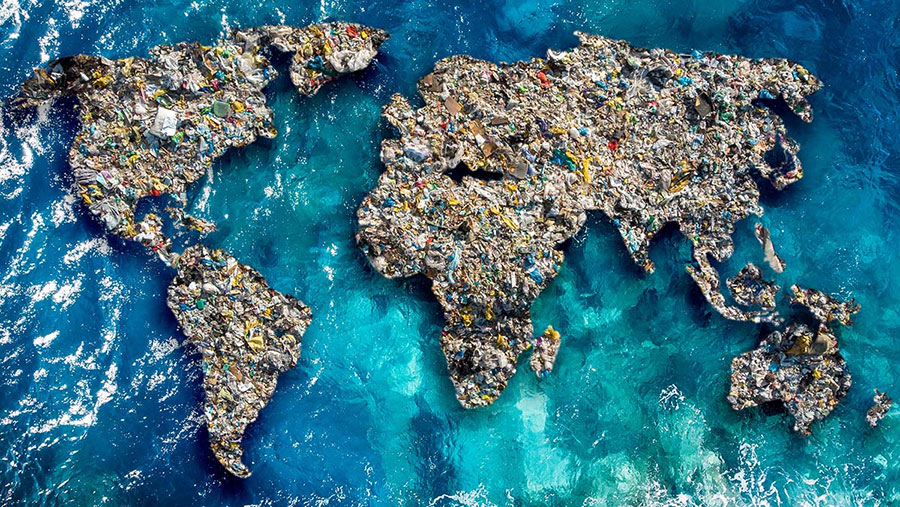
Mass production of plastics began in the 1940s, and because of their convenience and speed, production has increased rapidly. Only 3% of the plastic produced is effectively recycled, while the rest cannot be effectively disposed of. About 10 percent of plastic ends up in the ocean. Our world, is gradually becoming pale.
Plastic debris pollution is widespread, even in the surface and deep oceans of the North Atlantic and Pacific oceans. The main hazards of plastics include estuarine areas, intertidal zones and the ocean, partly because of human disposal and partly because of pollutant discharge.Much of this plastic, much of it, finds its way back into you and me after a Gulliver's Travels in the ocean. Here comes a new concept -- microplastics. Microplastics refer to plastic particles with particle size less than 5 mm. Their physical and chemical properties are extremely stable and difficult to degrade. They can exist in the environment for a long time, and can exist in the water environment for hundreds to thousands of years.
When microplastics enter the environment, their own toxic additives, such as anti-UV agents, pigments, flame retardants and plasticizers, can be released into the sea along with the rest of the seawater contact, and these substances also cause great harm to Marine life.
There are two sources of microplastics in water. Direct source refers to the decomposition of large plastics into small particle size plastic particles under the action of sunlight, tide and wind. Indirect sources are cosmetics, toothpaste and other daily necessities. Yes, you heard that right. Some cosmetics and toothpastes contain plastic softeners. In addition, nylon and other artificial plastic fibers and civil or industrial additives also contain plastic particles.
Due to their variable shape and gravity, microplastics are widely distributed in seawater surface, deep sea and seafloor sediments and therefore affect a variety of Marine organisms.
Viruses, bacteria and other microorganisms in the ocean can attach to the surface of microplastics, build colonies and form biofilms, thus forming new habitats for viruses, bacteria and microorganisms in the ocean. But at the same time, this piece of microplastic is even more toxic. If swallowed by other animals, it can cause infection. And when microbes form biofilms on the surface of microplastics, their hydrophilicity and density increase, causing them to sink to the ocean floor, where they accumulate.
Then there's phytoplankton, the primary producer of the ocean, which provides food and oxygen to Marine life. Microplastics can block sunlight and interfere with photosynthesis. At the same time, some microalgae can attach to the microplastic, forming a cluster of algae. In this way, they can drift with little athletic ability to new areas and become the dominant species, causing an invasion. At the same time, some animals that eat these algal clumps also eat microplastics.
Some fish ingest microplastics directly, some filter-feeding shellfish do so as they filter seawater for food, and some animals with bad eyes can't tell the difference between plastic and food and simply eat them together.
Once upon a time, white is a kind of pure color, it represents the snow, represents the purity, represents the angel feathers and young us a lovely dream.
Now, it's a proxy for cancer, it's a proxy for smog, it's a proxy for plastic.
The solution of white pollution is a big problem, which requires every one of us to make a little effort.
We can not donate money, but at least, we can pick up the plastic products on the ground, to tell others not to litter. Help my mother wash the dishes while protecting the world. The world needs more heroes.
If you want to describe our earth, I hope it is always full of hope green and vibrant blue, rather than a silent white.